Cliquez pour charger le lecteur.
Si la lecture ne fonctionne pas, rechargez le lecteur ou ouvrez-le directement.
Choisir un épisode
Verano de Amor
Synopsis
Aucun synopsis disponible.
Recommandé pour vous

The story begins in a small town in rural Mexico, home to Maria López—a humble, dreamy young woman of indigenous descent—who decides to leave her village for Mexico City in search of work and a better life. Upon arriving in the capital, she begins working as a domestic helper in mansions across wealthy neighborhoods, using her earnings to pay for sewing classes. At one of these homes, she meets Juan Carlos del Villar, a playboy who seduces and wins her over.
Simplemente Maria

L'histoire tourne autour de familles vivant à Genoa City, dans le Wisconsin, aux États-Unis. Les personnages du feuilleton sont répartis en différents clans et plusieurs familles. Au début, le feuilleton était centré sur la rivalité entre les Brooks et les Foster, mais a depuis fortement évolué. Aujourd'hui, les Chancellor possèdent une forte notoriété historique dans la ville tandis que les Newman et les Abbott dominent le monde de l'entreprise sur le plan national.
Les Feux de l'Amour
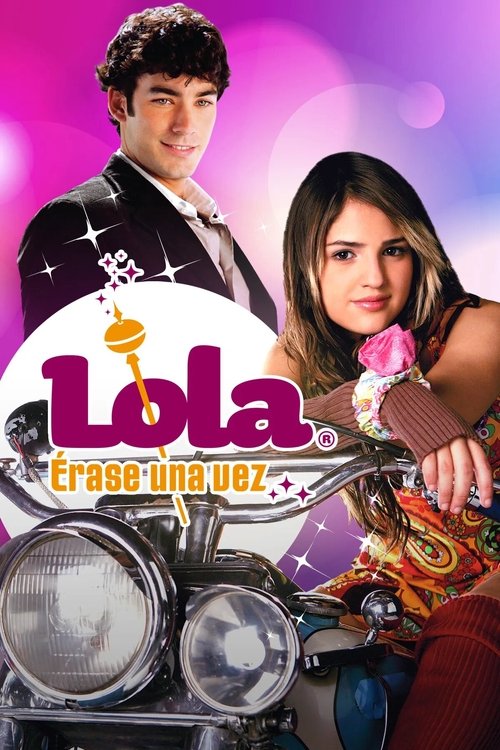
Lola... Érase Una Vez is a teen targeted Mexican melodrama telenovela produced by Televisa that is an adaptation of the Argentine global phenomenon and teenage telenovela Floricienta. The show tells the story of a modern Cinderella, Lola, a 20 year old girl, who works as a nanny and sings in a rock band and meets her so call Prince Charming. It debuted in Mexico on February 26, 2007, starring Aarón Díaz and Eiza González. The show had gained popularity among teens and children not only in Mexico but also internationally including Venezuela, Spain and the in United States. With concert performances filling major auditoriums and songs by the protagonist become radio hits. It debuted in the United States on Univision in March 2008 and ended on January 26, 2009. The series consisted of 224 episodes which aried Monday through Friday at 3 P.M, intentionally for teenagers to watch after school, as is typical for most teenage & children telenovelas in Spanish networks.
Lola… Once Upon a Time

Four teenagers at an elite school in Buenos Aires are drawn together by their love of music, despite their differing social and economic backgrounds.
Rebelde Way

Mi Pequeña Traviesa is a Mexican youth and family telenovela produced and directed by Pedro Damián for Televisa and originally broadcast on Canal de las Estrellas from December 8, 1997, to April 24, 1998. It is an adaptation of the Argentine telenovela Me llaman Gorrión, created by Abel Santa Cruz. The telenovela stars Michelle Vieth and Héctor Soberón. The story follows Julia González, a young woman whose dreams of pursuing a professional career are interrupted after her father is left paralyzed in an accident. To support her family, she disguises herself as a boy in order to find work. Along the way, she falls in love with Alberto Miranda, and together they must overcome social differences, family conflicts, and the many obstacles that stand in the way of their happiness.
Mi Pequeña Traviesa

A Salem, deux familles, les Horton et les Brady, vivent paisiblement. Derrière ce calme relatif, de multiples passions couvent et des intrigues se nouent…
Des jours et des vies
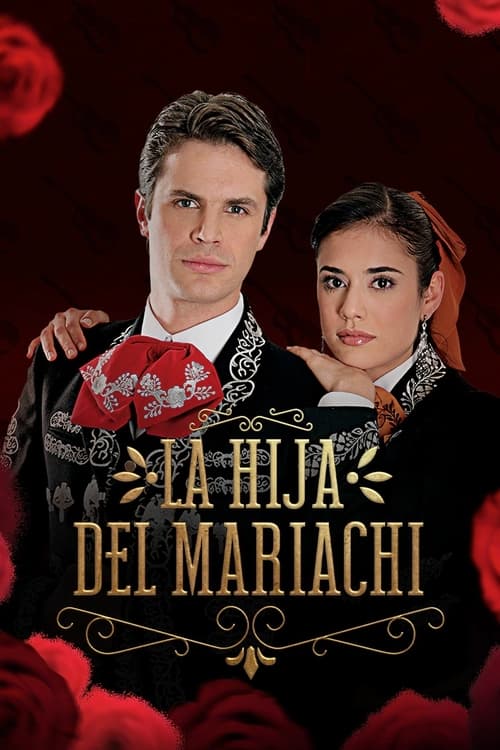
Emiliano, a wealthy Mexican businessman, is ripped off by his friends and partners. Hidden in Bogotá, he receives help from Rosario, a mariachi singer. She does not know Emiliano’s background and that he is wanted by the police of two countries and by a criminal organization. With a new name and personality, he adapts well to his new life as a mariachi band member and finds in Rosario the love of his life. But he is afraid his secret will tear them apart. He needs to clear his name and resolve his case to avoid that fate. Meanwhile, he often finds his love tested and vulnerable to several rivals, but Rosario always trusts that he has been honest with her.
La hija del Mariachi

María del Mar, Marimar, est une jeune mexicaine fleur bleue qui ne sait ni lire ni écrire. Elle vit dans un squat de la plage avec son papi Pancho, sa mamie Cruz, son chien Sac à puces, et sa poule Macha. Contre l'avis de ses grands-parents, elle se rend souvent sur des terrains privés pour récupérer des fruits et des légumes du jardin. Un jour, elle croise le regard de Sergio Santibañez fils du propriétaire de l'Hacienda où elle s'est introduite. Elle est subjuguée par cet homme. Emu par la situation de la jeune femme qui s'accroche à lui, et se sentant en âge de se marier, il propose à Marimar de s'installer à l'Hacienda. Sergio n'est pas amoureux mais ils se marient rapidement car Sergio veut faire rager son père qui refuse de lui attribuer sa part de l'Hacienda. Renato, le père de Sergio et surtout Angelica, la femme de ce dernier regrettent d'avoir poussé Sergio à trouver une épouse. Sergio est footballeur dans un club de la capitale, Mexico. Marimar est vexée de voir que son mari ne souhaite pas qu'elle le rejoigne. Il lui propose de rester à l'Hacienda en attendant qu'il fasse construire une maison non loin de là. Il s'imagine que Marimar sera une parfaite maîtresse de maison à son retour. Il lui envoie des lettres qui ne lui sont pas lues. Marimar est gentille mais elle peut se montrer très insolente avec les gens qui la prennent de haut. Elle se dispute donc régulièrement avec Angelica. Angelica se débarrasse d'elle en l'accusant d'un vol de bijoux. Marimar se retrouve en prison enceinte. Angelica ordonne à un de ses employés de s'occuper des grands-parents de Marimar. Il fait plus que demandé en les tuant. Marimar ne reste pas longtemps en prison. À sa libération elle ne rêve que d'une chose : quitter la région et prendre un nouveau départ. Avec l'aide du prêtre, Padre Porres, elle trouve un logement dans une auberge de Mexico. La poule Macha finit dans les assiettes de l'auberge. Marimar est embauchée comme domestique chez le riche homme d'affaires Gustavo Aldama, qui recherche sa fille. Gustavo va faire d'elle une femme cultivée, distinguée, ambitieuse et son héritière. Ce n'est que la veille de sa mort qu'il apprend que cette jeune femme est en réalité sa fille. Marimar a perdu toute naïveté. À Mexico on la connaît sous l'identité de Bella Aldama, une redoutable femme fatale, orgueilleuse et très méfiante. Elle réussit à cacher sa grossesse, puis élève sa fille en toute discrétion. Sergio tombe amoureux de cette femme d'affaires charismatique. Il a des doutes mais refuse de croire que Marimar ait pu autant changer. Marimar ressent toujours quelque chose pour Sergio mais n'oublie pas le manque de considération de celui-ci à l'époque où elle était pauvre. Elle ne supporte pas la goujaterie de son mari qui semble bien s'amuser à Mexico. Marimar se vante d'être riche, tourne Sergio en bourrique, et souhaite se venger de la famille Santibañez. Le chien Sac à puces, dont on entend les pensées, est bien plus perspicace que les humains. Il essaie de protéger Marimar contre elle-même.
Marimar

Teresa Chavez est une jeune femme dominée par son avidité. Ses parents ont fait de grands sacrifices pour lui donner une bonne éducation, une vie décente, mais Teresa ne se soucie que de devenir riche. Teresa est une jeune femme belle et intelligente, elle cherche désespérément à quitter la misère du quartier où elle vit. En dépit d'être belle et d'avoir le soutien et l'amour de ses parents, elle vit une vie misérable et pleine de ressentiment, car la pauvreté a causé la mort de sa sœur. Rosa meurt d'une maladie cardiaque, Teresa jure qu'elle ne sera plus jamais pauvre. Elle fait des plans pour échapper à la pauvreté qui l'entoure, en utilisant sa beauté comme un moyen d'accéder au grand monde. Elle est amoureuse de Mariano, un homme qui vit dans son quartier et étudie pour devenir un médecin afin de répondre aux attentes de Teresa et de combler tous ses rêves. Mais Teresa est impatiente. Pendant ses études dans une école très sélective, Teresa rencontre Paulo, un jeune homme riche et très populaire parmi tous les élèves. Teresa, voyant en lui un moyen rapide de devenir très riche, rompt avec Mariano et utilise sa beauté pour charmer Paulo. Ils sortent ensemble pendant l'école secondaire, mais, après avoir découvert que Teresa est pauvre, il rompt avec elle. Genoveva, la mère de Paulo conseille aussi à Paulo de ne jamais revoir Teresa.
Teresa

La Mujer Del Vendaval is a 2012 Mexican telenovela produced by Mapat L. de Zatarain for Televisa. It is a remake of the Venezuelan telenovela Un Esposo para Estela. Ariadne Díaz and José Ron star as the main protagonists, while Chantal Andere, Marco Muñoz, Manuel Flaco Ibañez and Florencia del Saracho as the main antagonists.
The Lady from Vendaval

Camila Monterde is a beautiful veterinarian whose life has been torn apart by a tragic accident in which her fiancé, Luis, was killed. Hoping to ease her depression, her uncle, Daniel Monterde, invites her to live at his ranch, where she can rest and recover while caring for the many animals he keeps there. Meanwhile, in Chile, Daniel Diaz suddenly receives a letter stating that he has come into a substantial inheritance and must travel to Mexico to claim it. Surprised and curious, he’s about to make the trip when a vicious lie disrupts his plans and lands him in prison, causing him to lose the inheritance and his family. Deeply bitter and hungry for revenge, Daniel travels to Mexico determined to destroy the Monterde family, which he blames for his terrible misfortune. He takes a job at the Monterde ranch to be close to his prey. His vengeance is perfectly planned except for one unexpected development: he and Camila fall passionately in love and that changes everything.
Valiant Love

Popular telenovela produced in Mexico in 1979, starring Verónica Castro, Rogelio Guerra and Rocío Banquells. Castro also sang the theme Aprendí a Llorar, a song written by Lolita de la Colina. The telenovela was produced by Chilean Valentín Pimstein and Carlos Romero, it was directed by Rafael Banquells. The story was written by Inés Rodena and adapted by Valeria Philips.
Los ricos también lloran
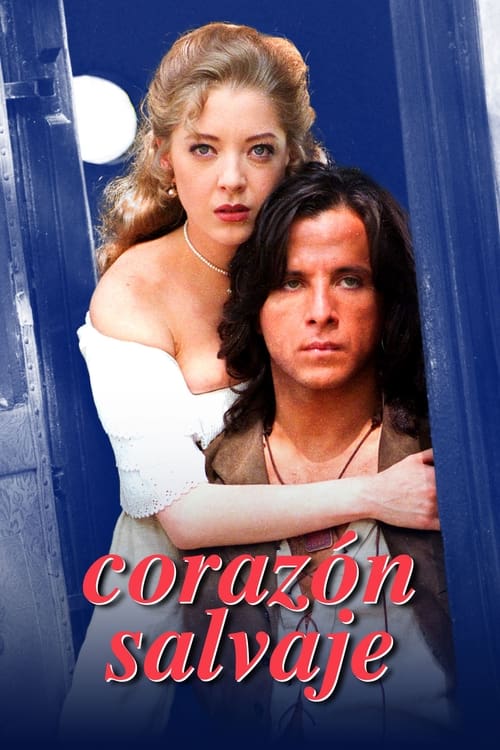
A telenovela that dramatizes the romances and rivalries between two brothers and two sisters in Mexico between the years 1885 and 1900.
Corazón salvaje

Juan de la Cruz, a young seminarian, visits the home of his mother, Ana Joaquina—a religious zealot who has always imposed her will on her son and instilled in him a calling to serve God. Working in Ana Joaquina’s household is Luciana, an innocent, dreamy young woman who falls in love with Juan de la Cruz. One night, swept up in the passion of youth, they give in to their feelings with tenderness and innocence. Upon discovering this, Ana Joaquina throws Luciana out; by then, Luciana is already pregnant with Juan de la Cruz’s child. When the time comes to give birth, she leaves her daughter at a stranger's doorstep, hoping the child will be raised there, but the baby is instead taken to an orphanage. To survive, Luciana becomes involved with a series of unsavory men—including Pedro Trujillo, a brutal man who beats and abuses her.
El Privilegio de Amar

Sofía Peralta-Avitia Villaseñor, a successful businesswoman and great mother, who feels lonely in her marriage to Gonzalo Balmori-Ricci Nava. At the same time, her daughter, Bárbara Balmori-Ricci Peralta-Avitia, and her young bodyguard, Salvador "Chava" Reyes Encino, will transform their rebelliousness into passion. But none of them know that the evil, ambitious people around them will try to meddle in their paths on their road to love.
Guardián de mi vida

Maricruz and Beatriz are school friends; Beatriz comes from a well-to-do family, whereas Maricruz belongs to a lower socioeconomic stratum. Both are on the verge of turning fifteen and are preparing to leave childhood behind. Issues within their family and social environments affect them directly; for Beatriz, her parents' marital breakdown becomes the primary obstacle to overcome, compounded by a sexual awakening fraught with taboos and misinformation. Meanwhile, Maricruz must contend with her mother's overprotectiveness and prejudices, as well as the tension caused by a neighbor who is obsessed with her.
Quinceañera

Mistreated by the Narváez family, the poor and innocent Maricruz is humiliated, abandoned, and imprisoned, losing everything. Upon discovering her true origins, she transforms into a wealthy and powerful woman. Driven by grief and the loss of her father, she vows revenge against everyone who made her suffer.
Wild at Heart

Dos Hogares is a Mexican telenovela produced by Emilio Larrosa for Televisa. Anahí, Carlos Ponce, Sergio Goyri, Alfredo Adame, Laura León, Jorge Ortiz de Pinedo, Joana Benedek, Víctor Noriega, Claudia Álvarez, Abraham Ramos, Malillany Marín and Olivia Collins in the leading roles. Canal de las Estrellas aired Dos Hogares from June 27, 2011 to January 20, 2012, with Abismo de Pasión replacing it. From October 31, 2011 to May 29, 2012., Univision broadcast Dos Hogares at 3pm central, replacing one hour of Ni Contigo Ni Sin Ti.
Dos Hogares

The realistic chronicles of a working class group of Hispanic youth, with heavy subject matter like sex, drug dealing, teen pregnancy, abuse, drinking, rape, deception, and heartbreak.
Clase 406

A romance blossoms between a young country woman and the grandson of the late owner of a tequila company. The young man promises to return and marry his girlfriend once he finishes his studies abroad, unaware that she has become pregnant.